
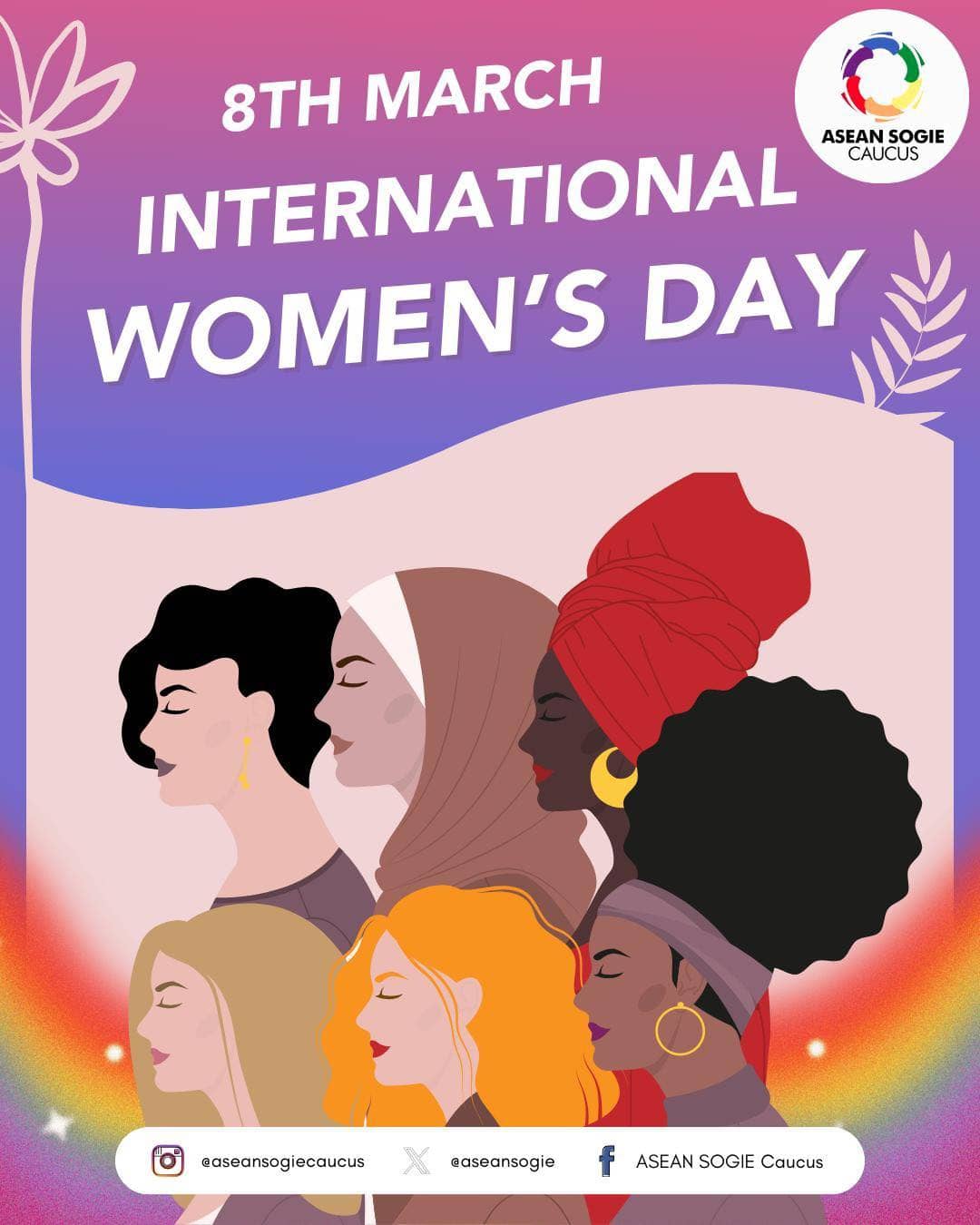
International Women’s Day Is Not Only a Celebration, It Is a Reminder of the Ongoing Struggle
From the era of colonial domination to the present day, its legacies continue to shape gender and sexual diversity across Southeast Asia. Colonial rule imposed rigid gender binaries and heteronormative systems that erased the rich, diverse, and often more egalitarian gender practices that existed in many Southeast Asian societies long before colonisation. Historically, we recognize gender-diverse and spiritually significant roles such as the babaylan in the Philippines and the bissu in South Sulawesi, Indonesia, who embody sacred forms of gender plurality within their communities.
What we continue to experience today is the enduring legacy of this system—what María Lugones describes as the Coloniality of Gender. This coloniality continues to manifest in contemporary realities, where trans women and LBQ women are among those most affected. Trans women are often portrayed or treated as if they do not belong within society because of rigid gender binaries imposed through colonial systems. Meanwhile, LBQ women are frequently judged as women who go against dignity as described under mushaqah law, precisely because their lives and relationships confront the heterosexist in gender binaries norms and expectation.
Women's and racialised communities’ bodies have historically been sites of colonial domination and control. We recall Anarcha Westcott, an enslaved black teenage girl whose body was exploited for medical experiments, now her name has to be remembered as the Mother of Gynaecology. We also remember countless Asian women forced into sexual slavery as Jugun Ianfu–comfort women during Japanese colonisation. Additionally, colonial regimes systematically erased and suppressed gender-diverse communities to enforce norms and control bodies, identities, and expressions. Today, we witness how grand narratives about women’s bodies are shaped and contested by colonial and imperial powers, which arrogate to themselves the authority to determine which women are considered liberated and which are not. We see this in the portrayal of Rohingya women as backward, or in claims that Iranian women who cover their bodies and wear hijab are inherently unfree—despite their high literacy rates and number of women scientists. These narratives often unfold alongside Western propaganda and within the context of ongoing wars and militarization driven by imperial and genocidal powers.
This is how women’s bodies are used by colonial imperial domination to serve their interests while dividing us, the 99%.
As we commemorate International Women’s Day, we reaffirm that the coloniality of gender remains deeply embedded in our institutions, our laws, and our societies. The struggle against it is therefore far from over.
Today, we call for stronger regional solidarity across Southeast Asia. This requires learning from local communities, reclaiming our own histories and narratives, and creating spaces to unlearn and undo the colonial systems that continue to regulate gender and sexuality. The path forward lies in solidarity—grounded in Southeast Asian live realities, rooted in local knowledge, and committed to building inclusive movements that centre those most marginalised.
On this International Women’s Day, we stand together in resistance and in hope. We continue the struggle to dismantle the coloniality of gender and to build a future where all people—women, and all gender-diverse communities—can live with dignity and freedom.
In Solidarity,
ASEAN SOGIE Caucus